
Ford Towing & Payload Explained: Understanding GVM, GCM, Payload
Posted in Ford Tips Advice
Ford Towing & Payload Explained: Understanding GVM, GCM, Payload and Every Weight Rating That Matters
Whether you drive a Ford Ranger, Everest, Ranger Super Duty, F-150 or Ranger Raptor, understanding your vehicle's weight ratings is one of the most valuable pieces of knowledge you can have as an owner.
Spend enough time looking through Ford brochures, caravan specifications or online towing discussions and you'll quickly come across a long list of acronyms:
GVM. GCM. ATM. GTM. GAWR. Payload. Kerb Weight.
At first glance they can seem overwhelming. Many owners understand each term individually, but where things become confusing is how they all relate to one another.
A Ranger might have a 3,500kg maximum braked towing capacity.
An F-150 might tow up to 4,500kg.
A Ranger Super Duty might boast a 4,500kg GVM and 8,000kg GCM.
They're all impressive numbers - but none of them tell the whole story on their own.
Understanding what each measurement actually means, how it's calculated and how it affects the others is what allows you to load your Ford confidently, tow safely and get the most from the vehicle Ford's engineers designed.
Whether you're loading tools into a Ranger, hitching a caravan behind an Everest, towing a large boat with an F-150 or making full use of the Ranger Super Duty's heavy-duty capability, the same weight principles apply.
In this guide, we'll explain exactly what every major towing and payload term means, how they're calculated, and how they all work together in a Ford context.
Vehicle Weight Terms
Before you attach a trailer, caravan or boat, it's important to understand the weight ratings that apply to the vehicle itself.
Everything starts here.
Think of these as the foundation of every towing calculation. Once you understand these four measurements, the trailer terminology becomes much easier to follow.
We'll cover:
- Kerb Weight
- Payload
- Gross Vehicle Mass (GVM)
- Gross Axle Weight Rating (GAWR)
Kerb Weight
Every payload calculation starts with Kerb Weight.
Kerb Weight is the weight of your Ford exactly as it leaves the kerb, ready to drive.
It includes:
- A full tank of fuel
- Engine oil
- Coolant
- Brake fluid
- AdBlue (where applicable)
- All other essential operating fluids
- Standard factory equipment
It does not include:
- Driver
- Passengers
- Cargo
- Aftermarket accessories
- Trailer tow ball download
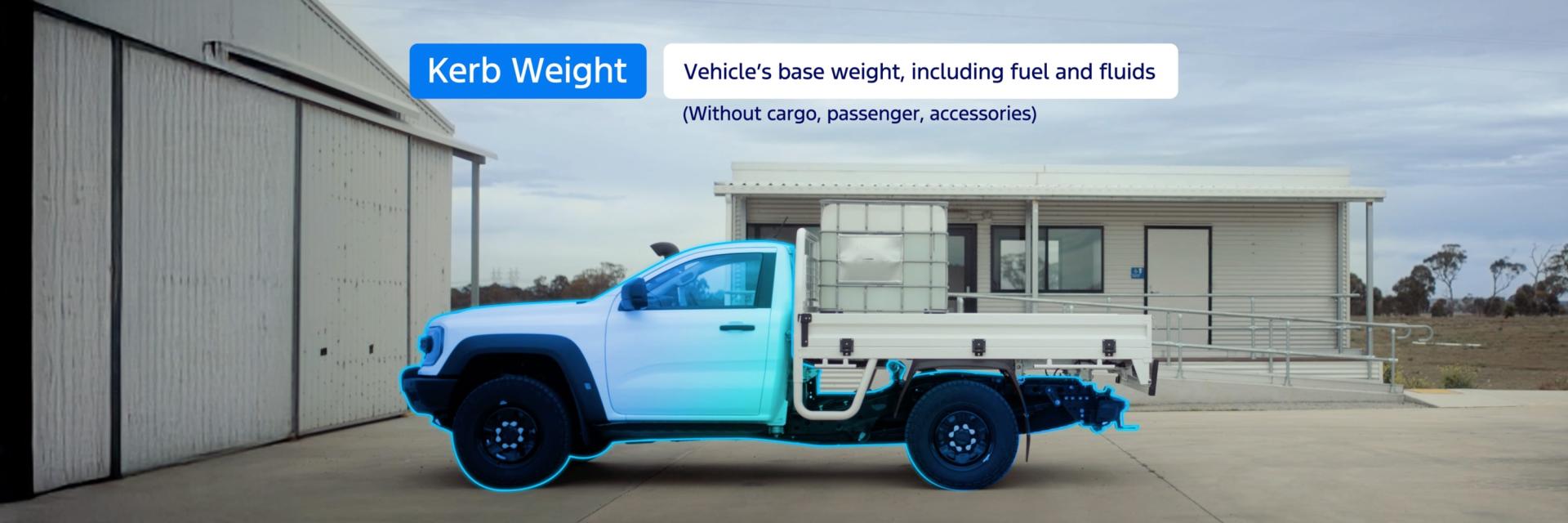
Think of it as your Ford before you've added anything to it.
Ford uses Kerb Weight as the starting point for calculating Payload across the Ranger, Everest, F-150 and Ranger Super Duty ranges. Because every model is built differently, each begins with a different Kerb Weight. A Ranger XL naturally weighs less than an Everest Platinum, while a Ranger Super Duty has a higher Kerb Weight again thanks to its reinforced chassis, heavy-duty driveline, upgraded suspension, larger axles and commercial-focused engineering.
The important thing isn't comparing kerb weights between models.
It's understanding that every payload calculation begins from this figure.

Motorama Ford Tip
If you've fitted accessories after taking delivery, such as a bull bar, canopy or steel tray, they're no longer part of your vehicle's published kerb weight. They now become part of your payload.
Payload
Once you understand Kerb Weight, Payload becomes very simple.
Payload is everything you add to your Ford after it leaves the kerb. It isn't just what's sitting in the tray.
Payload includes:
- Driver
- Passengers
- Luggage
- Camping gear
- Tools
- Recovery equipment
- Roof racks
- Roof-top tents
- Bull bars
- Winches
- Drawer systems
- Canopies
- Steel trays
- Fridges
- Tow ball download
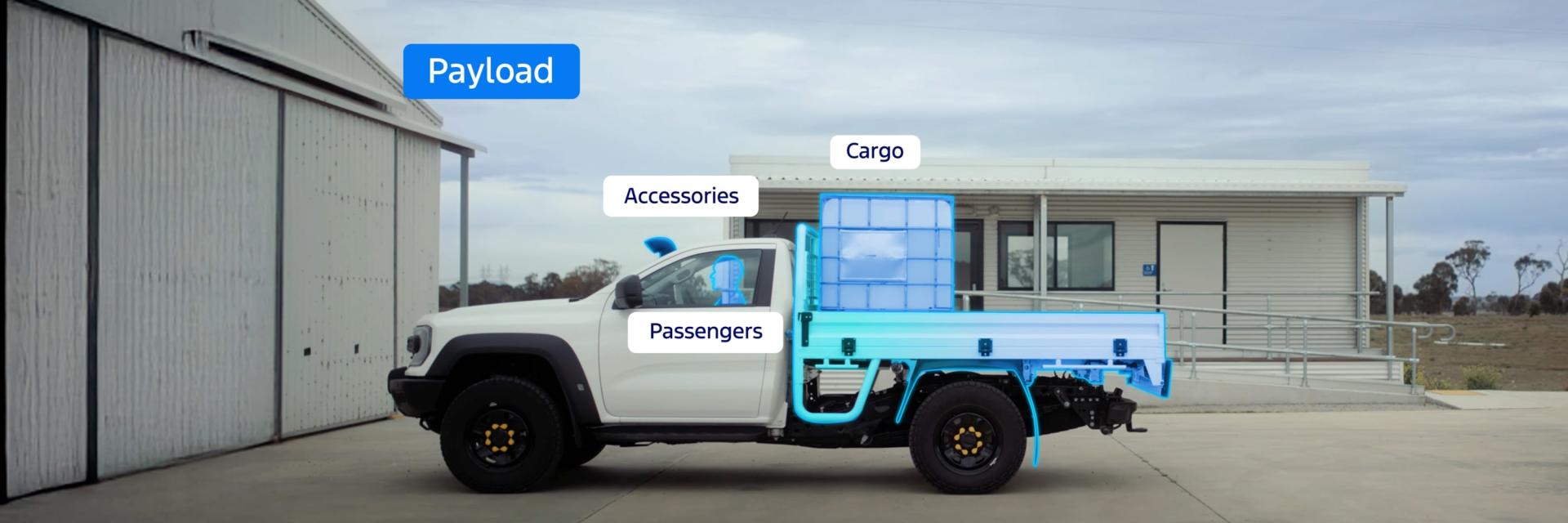
Essentially...
If it wasn't included in the Kerb Weight, it becomes Payload. This is one of the reasons Payload is so important for Ford owners.
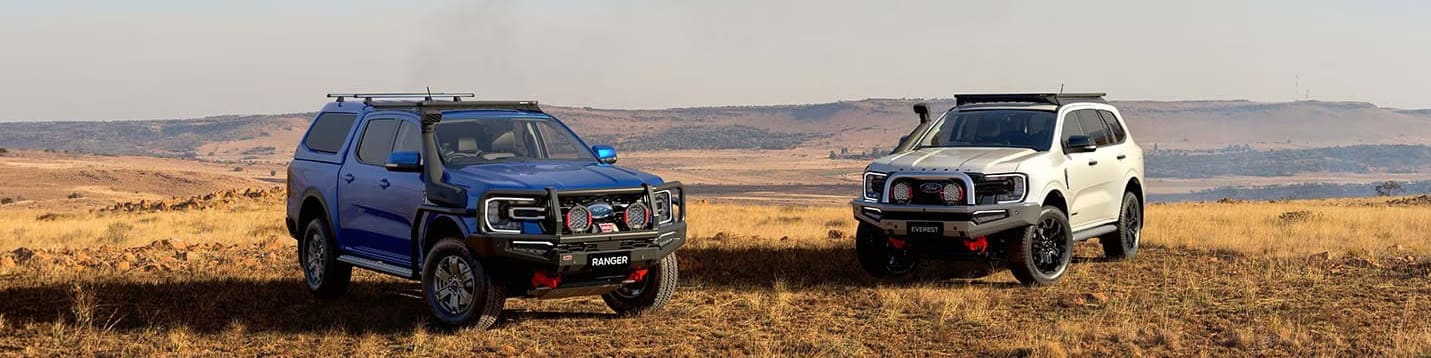
The Ranger and Everest are two of Australia's favourite vehicles for touring and towing. It's common for owners to personalise them with genuine Ford and ARB accessories, creating vehicles perfectly suited to work, camping or long-distance travel.
Likewise, many Ranger Super Duty owners will fit steel trays, service bodies, water tanks and toolboxes, while F-150 owners often prepare their vehicles for towing larger caravans or horse floats.

Motorama Ford Tip
Rather than thinking about each accessory individually, think about your finished vehicle. A canopy, bull bar and drawer system might each seem relatively modest on their own, but together they can significantly reduce the payload available for passengers or towing.
None of these additions are "bad." They're exactly what these vehicles are designed for.
The important thing is recognising that every addition contributes towards your available payload.
Ford itself defines Payload as the maximum combined weight of occupants, cargo, added accessories, added structures and Tow Ball Download that can be carried before reaching the vehicle's Gross Vehicle Mass.
Gross Vehicle Mass (GVM)
Now we bring the first two measurements together.
Gross Vehicle Mass (GVM) is the maximum legal operating weight of your Ford. It's the total weight of the vehicle once it's fully loaded.
The calculation is straightforward.
Kerb Weight + Payload = Gross Vehicle Mass
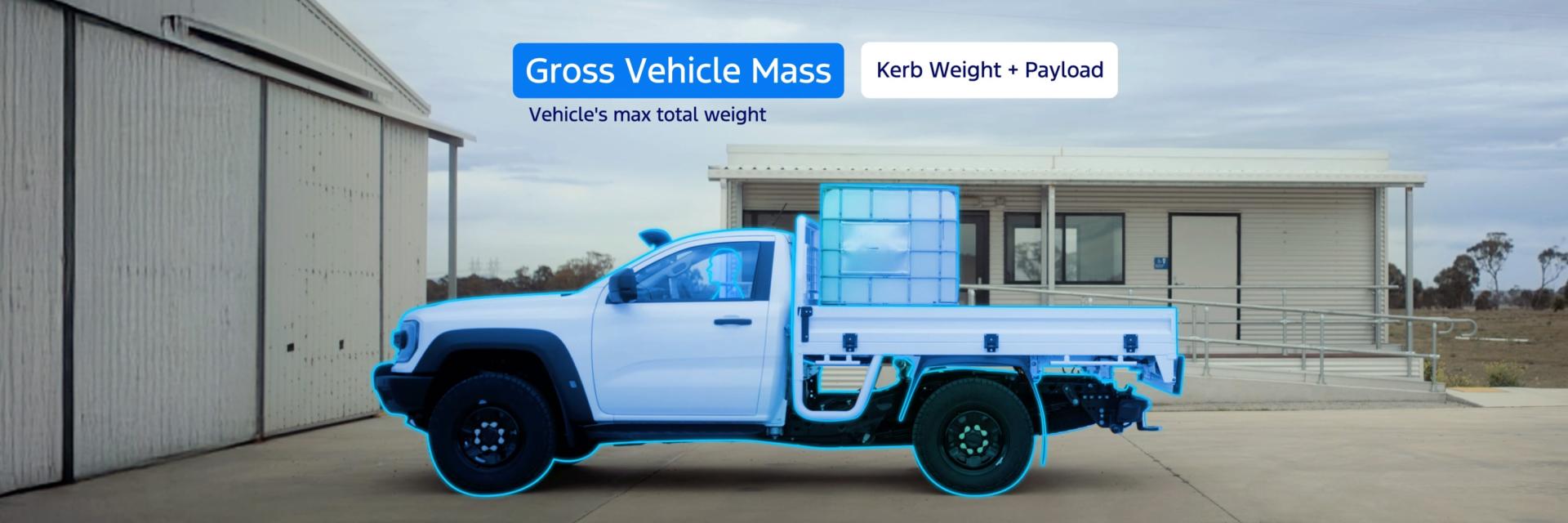
Think of Gross Vehicle Mass as your Ford's maximum loaded weight. Every kilogram of Payload is added to the vehicle's Kerb Weight until it reaches its GVM.
That means GVM includes:
- Vehicle
- Fuel
- Driver
- Passengers
- Accessories
- Cargo
- Tow ball download
Everything.
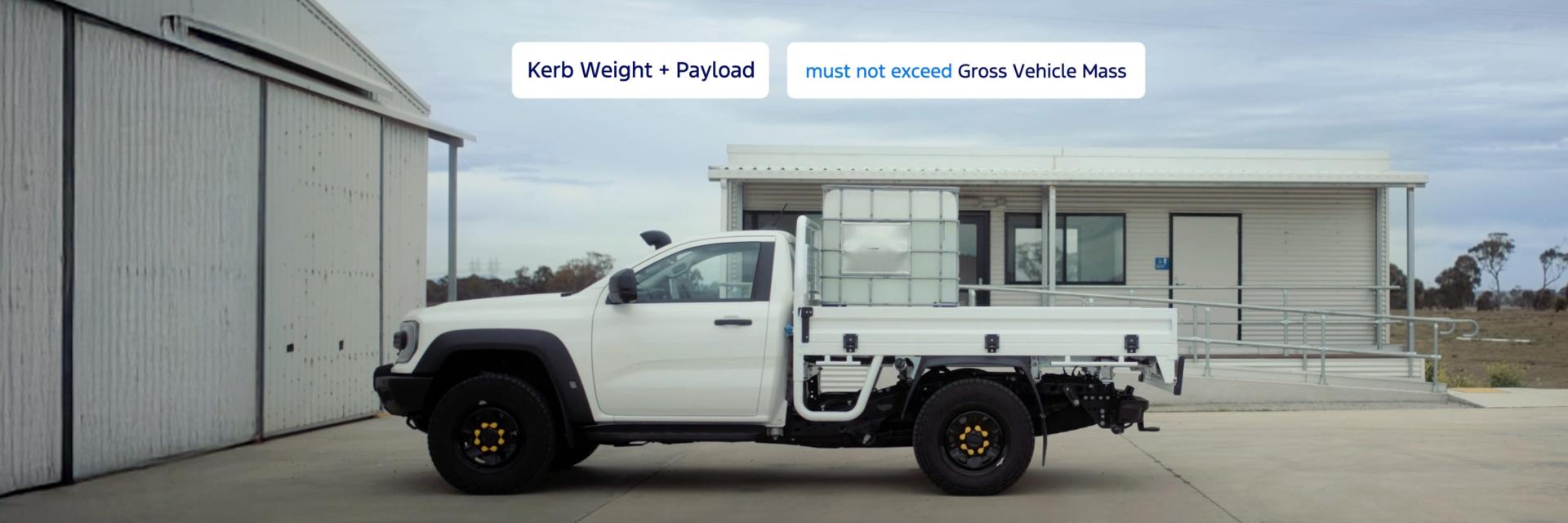
Your Ford must never exceed its specified GVM.
This applies whether you're driving to work with a tray full of tools or setting off around Australia towing a caravan.
One of the reasons the Ranger Super Duty has attracted so much attention is its factory-engineered 4,500kg GVM, giving owners significantly greater carrying capacity than a conventional ute. Likewise, every Ranger, Everest and F-150 has its own manufacturer-specified GVM designed around the vehicle's intended purpose.
The number itself changes between models. The calculation never does.
Gross Axle Weight Rating (GAWR)
Just when you think you've got everything figured out... Ford introduces another weight rating.
Fortunately, this one's easy to understand.
Your Ford doesn't simply have a maximum vehicle weight. It also has a maximum weight that can be carried by each axle.
These are called the Gross Axle Weight Ratings, or GAWR.
There are two:
- Front Axle Rating
- Rear Axle Rating
These ratings exist because weight isn't always distributed evenly across the vehicle.
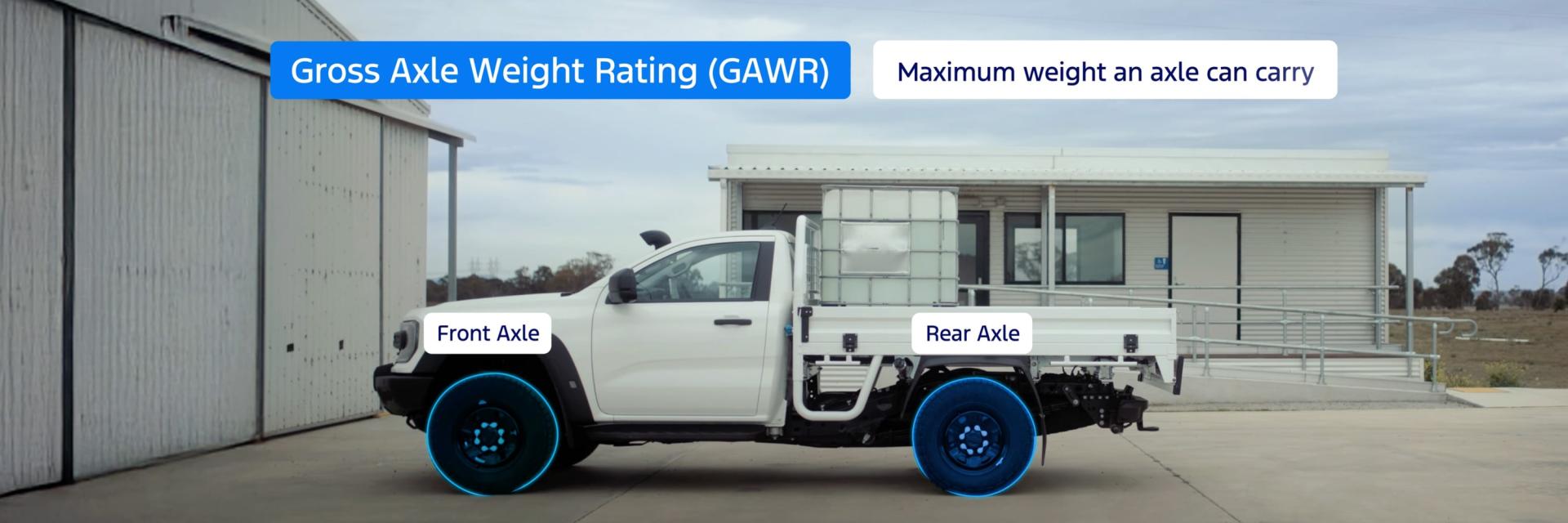
Whenever possible, heavier items should be distributed as evenly as practical across the vehicle to avoid overloading either axle.
Imagine a Ranger fitted with:
- Steel canopy
- Drawer system
- Fridge
- Recovery gear
- Spare wheel carrier
Now hitch on a caravan.
Although the total vehicle weight may still sit comfortably under GVM, much of that weight has been concentrated over the rear axle.
The rear axle may now be approaching its own limit before the vehicle reaches its overall GVM.
That's why Ford publishes both figures.
It's not just about how much weight you're carrying. It's also about where that weight is being carried.
This becomes particularly important for owners building touring vehicles or commercial work vehicles where accessories and cargo naturally accumulate toward the rear of the vehicle.
At this point, we understand the vehicle.
We know:
- Where every payload calculation begins.
- What contributes towards payload.
- How GVM is calculated.
- Why axle weights matter.
Now that we've covered the weight ratings that apply to your Ford itself, it's time to look at the trailer.
Trailer Weight Terms
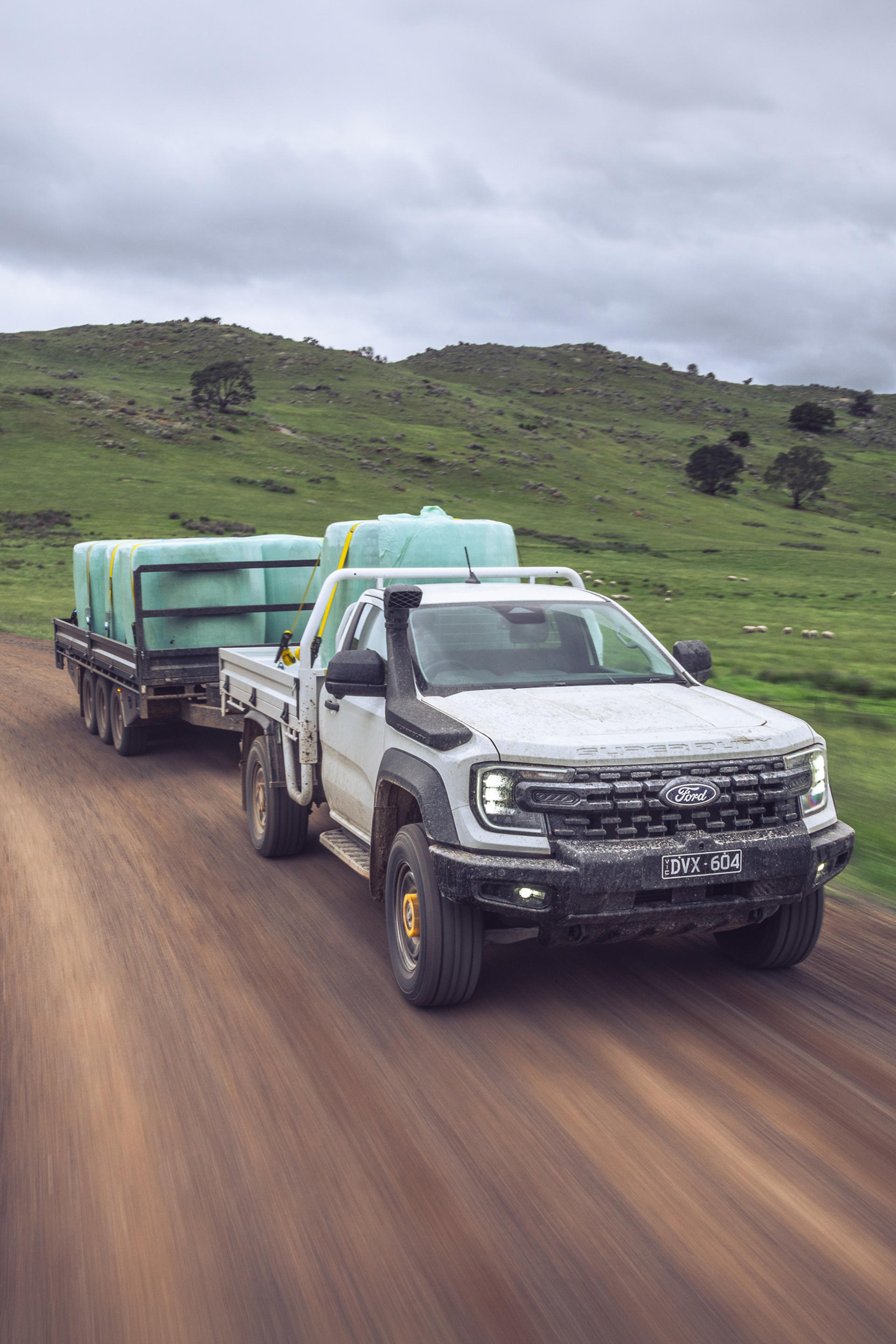
Whether you're towing a caravan, camper trailer, horse float, boat or work trailer, you'll encounter another set of weight ratings that work alongside your vehicle's GVM and Payload.
Just like the vehicle terms, these aren't independent figures. They all relate to one another.
Understanding how they're connected makes it much easier to understand your Ford's towing specifications and how your complete towing setup should be configured.
We'll cover:
- Aggregate Trailer Mass (ATM)
- Trailer Nose Weight (Tow Ball Download)
- Gross Trailer Mass (GTM)
- Gross Combined Mass (GCM)
Aggregate Trailer Mass (ATM)
The first trailer weight you'll usually encounter is Aggregate Trailer Mass (ATM).
ATM is the total weight of a trailer before it is connected to your Ford.
Imagine your caravan is sitting in your driveway, supported by its jockey wheel.
Everything on the trailer contributes towards its ATM.
That includes:
- The trailer itself
- Water tanks
- Gas bottles
- Food
- Camping equipment
- Clothing
- Batteries
- Solar equipment
- Boats
- Machinery
- Livestock
- Anything else being carried on the trailer
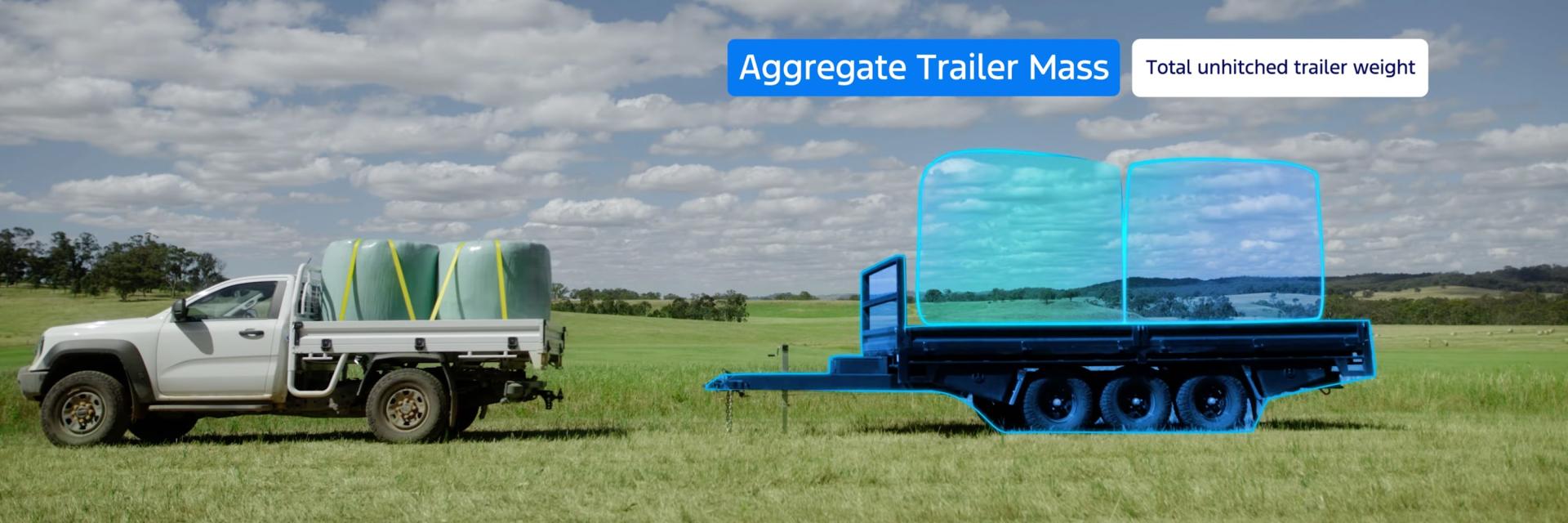
In other words, ATM is the trailer's complete weight while standing on its own.
It's often the first number you'll see when researching caravans or trailers because manufacturers use it to describe the trailer's maximum loaded weight.
However, it's important to remember that ATM only exists while the trailer is unhitched.
The moment you connect it to your Ford, part of that weight transfers to the vehicle.
That's where the next measurement comes in.
Trailer Nose Weight (Tow Ball Download)
Once the trailer is connected to your Ford, something interesting happens. The trailer no longer supports all of its own weight. A portion of that weight is transferred through the tow coupling and onto your vehicle's tow ball.
This is known as Trailer Nose Weight, also commonly referred to as Tow Ball Download.
Although it's created by the trailer, it's now being carried by the vehicle. That means it immediately becomes part of your Ford's Payload.
This is one of the most important concepts in towing because it connects everything we've already discussed.
Remember when we said payload includes everything added to the vehicle? Tow ball download is one of those things.

Whether you're towing behind a Ranger, Everest, F-150 or Ranger Super Duty, the downward force placed on the tow ball contributes towards:
- Payload
- Gross Vehicle Mass (GVM)
- Rear axle loading
It's one of the reasons why maximum towing capacity and Payload should never be considered separately.
As a general rule, many trailers are designed to achieve a Tow Ball Download of approximately 10% of the trailer's loaded weight, although the ideal figure always depends on both the trailer manufacturer and your specific Ford model.
The important point isn't the percentage.
The important point is understanding that this weight is now sitting on your Ford - not your trailer.

Maintaining the correct Trailer Nose Weight is about more than simply calculating payload. It also plays an important role in towing stability. Too little tow ball download can make a trailer more prone to sway, while excessive tow ball download unnecessarily reduces your available payload and places additional load on the rear axle.
Because Trailer Nose Weight is carried by the vehicle, it immediately reduces the Payload you have available for everything else.
For example:
Available Payload - Tow Ball Download = Remaining Payload
The remaining payload must still accommodate your passengers, luggage, accessories and cargo.

Motorama Ford Tip
Tow ball download is easy to overlook because you can't physically see it sitting inside the vehicle. However, your Ford's suspension, chassis and rear axle are all supporting that weight, so it should always be included when considering your available payload.
Gross Trailer Mass (GTM)
Once the trailer has been connected, not all of its weight remains on the trailer.
Some of it has now transferred to your Ford through the tow ball. The weight still being carried by the trailer's own wheels is called Gross Trailer Mass (GTM).
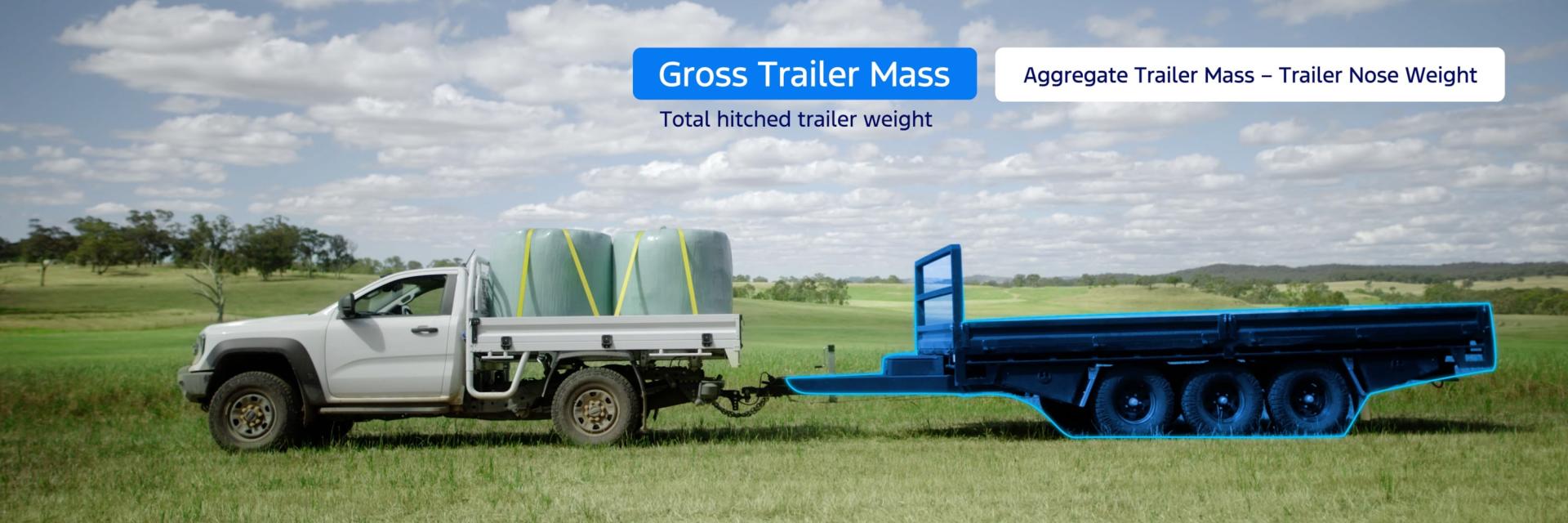
The relationship between the two measurements is straightforward:
Aggregate Trailer Mass (ATM) - Trailer Nose Weight = Gross Trailer Mass (GTM)
So while ATM describes the trailer standing on its own, GTM describes the trailer as it travels down the road.
This distinction often causes confusion because the trailer itself hasn't changed.
Only the way its weight is being supported has changed.
Part is now carried by the trailer. Part is now carried by the vehicle.
In simple terms, GTM is the weight still being carried by the trailer's own wheels after part of the trailer's weight has transferred onto your Ford.
Understanding this relationship is particularly useful when comparing trailer specifications with your Ford's towing limits.
Gross Combined Mass (GCM)
We've now reached the final weight rating. This is the number that brings everything together.
Gross Combined Mass, or GCM, is the maximum permitted weight of:
Your loaded Ford plus your loaded trailer combined.
Think of it as the total weight of the complete towing combination.
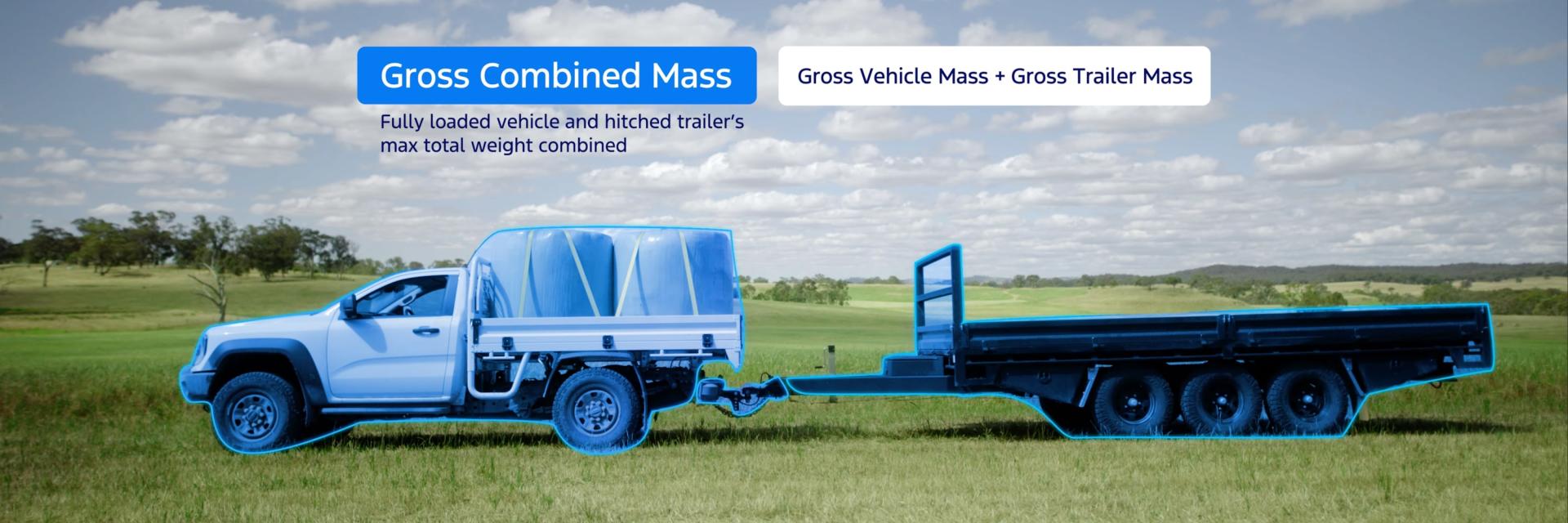
The calculation is:
Gross Vehicle Mass (GVM) + Gross Trailer Mass (GTM) = Gross Combined Mass (GCM)
This is why towing isn't simply about the trailer.
Even if the trailer falls comfortably within your Ford's maximum towing capacity, the combined weight of the loaded vehicle and loaded trailer must still remain below the manufacturer's specified GCM.
For example, the Ranger and Everest both offer impressive towing capability, while the F-150 and Ranger Super Duty extend that capability even further with higher Gross Combined Mass ratings engineered for heavier recreational and commercial towing. Regardless of which model you drive, however, the calculation remains exactly the same.
Key Takeaway:
When your Ford's Gross Vehicle Mass (GVM) and your trailer's Gross Trailer Mass (GTM) are added together, the combined figure must never exceed your vehicle's Gross Combined Mass (GCM).
Ford's engineers don't treat these as separate numbers. They treat them as one complete system. That's exactly how owners should think about them as well.
How All the Weight Ratings Work Together
At first glance, all of these acronyms can feel like individual pieces of information. In reality, they're simply different parts of the same calculation.
Everything starts with your Ford. Its Kerb Weight is the starting point - the weight it sits at when it’s ready to drive with a full tank of fuel and all essential fluids.
Everything you add becomes Payload, including passengers, cargo, accessories and, importantly, trailer Tow Ball Download.
Together, Kerb Weight and Payload make up your vehicle's Gross Vehicle Mass (GVM).
Your trailer follows the same logic. When it's standing on its own, fully loaded and unhitched, it has an Aggregate Trailer Mass (ATM). Once connected to your Ford, part of that weight transfers through the tow ball onto the vehicle. That transferred weight becomes Trailer Nose Weight (Tow Ball Download) and forms part of your vehicle's Payload.
The weight still supported by the trailer's own wheels becomes its Gross Trailer Mass (GTM).
Finally, when your fully loaded Ford and fully loaded trailer are connected, they create the final figure: Gross Combined Mass (GCM).
Once you understand that sequence, Ford's specification sheets become much easier to interpret because every number now has a place within the overall towing system.
Kerb Weight + Payload = Gross Vehicle Mass (GVM)
Aggregate Trailer Mass (ATM) - Tow Ball Download = Gross Trailer Mass (GTM)
Gross Vehicle Mass + Gross Trailer Mass = Gross Combined Mass (GCM)
Every towing specification on your Ford fits somewhere within this system. Understanding how they connect is the key to towing with confidence.

Looking for a Ford that's built around the way you tow?
From the versatile Ranger and family-focused Everest to the heavy-duty Ranger Super Duty and full-size F-150, every Ford has been engineered with a different purpose in mind.
Our team can help you find the model that best matches your towing, payload and lifestyle requirements.
Putting it into Practice
Imagine preparing your Ford Ranger for a family camping trip.
You begin with the vehicle's Kerb Weight.
You then add the wife and kids, your luggage, your recovery gear, plus the canopy and awning you just fitted last week. Those additions become Payload, and together they create your Gross Vehicle Mass.
Next, you connect a caravan.
Part of the caravan's weight transfers onto the tow ball, immediately reducing your remaining available Payload while increasing the load carried by your vehicle. The remainder of the caravan's weight stays on its own wheels as Gross Trailer Mass.
Finally, the loaded vehicle and loaded caravan combine to create Gross Combined Mass.
Every stage builds upon the previous one.
Once you understand that sequence, the various acronyms found throughout Ford brochures, specification sheets and towing guides stop feeling like unrelated numbers. Instead, they become one connected system that describes exactly how your Ford has been engineered to carry and tow weight safely.

Motorama Ford Tip
Rather than memorising each acronym individually, remember the sequence. Start with the vehicle, then the trailer, then the complete towing combination. Understanding the relationship between the numbers is far more valuable than simply remembering what each abbreviation stands for.
Frequently Asked Questions
General Ford Towing & Payload
Does tow ball download count as payload?
Is towing capacity the same as payload?
What's the difference between GVM and GCM?
Can I exceed my payload if I'm under the towing capacity?
Does fuel count as payload?
Accessories & Vehicle Modifications
Do genuine Ford accessories affect payload?
Does fitting a canopy reduce my available payload?
Should I weigh my Ford after fitting accessories?
Ranger
Can the Ford Ranger tow 3,500kg?
Which Ranger is best for towing?
Why does my Ranger's payload differ from another Ranger?
Everest
Can the Ford Everest tow a caravan?
Does carrying seven passengers affect towing?
F-150
If the F-150 can tow 4,500kg, do I still need to worry about payload?
Why does the F-150 feel more comfortable towing large caravans?
Ranger Super Duty
Is the Ranger Super Duty simply a Ranger with higher towing capacity?
What are Onboard Scales and Smart Hitch?
Safety & Best Practice
Why is trailer nose weight important?
Can I overload one axle without exceeding GVM?
Where can I find my Ford's towing specifications?
Check out Ford Australia's video guide on Towing and Carrying
Still have questions about your Ford's towing or payload capacity?
Every Ford is configured a little differently depending on its model, variant and accessories.
If you're unsure how payload, GVM or towing capacity applies to your vehicle, the team at Motorama Ford can help you understand your Ford's specifications and choose the right genuine accessories or towing equipment for the way you use it.