

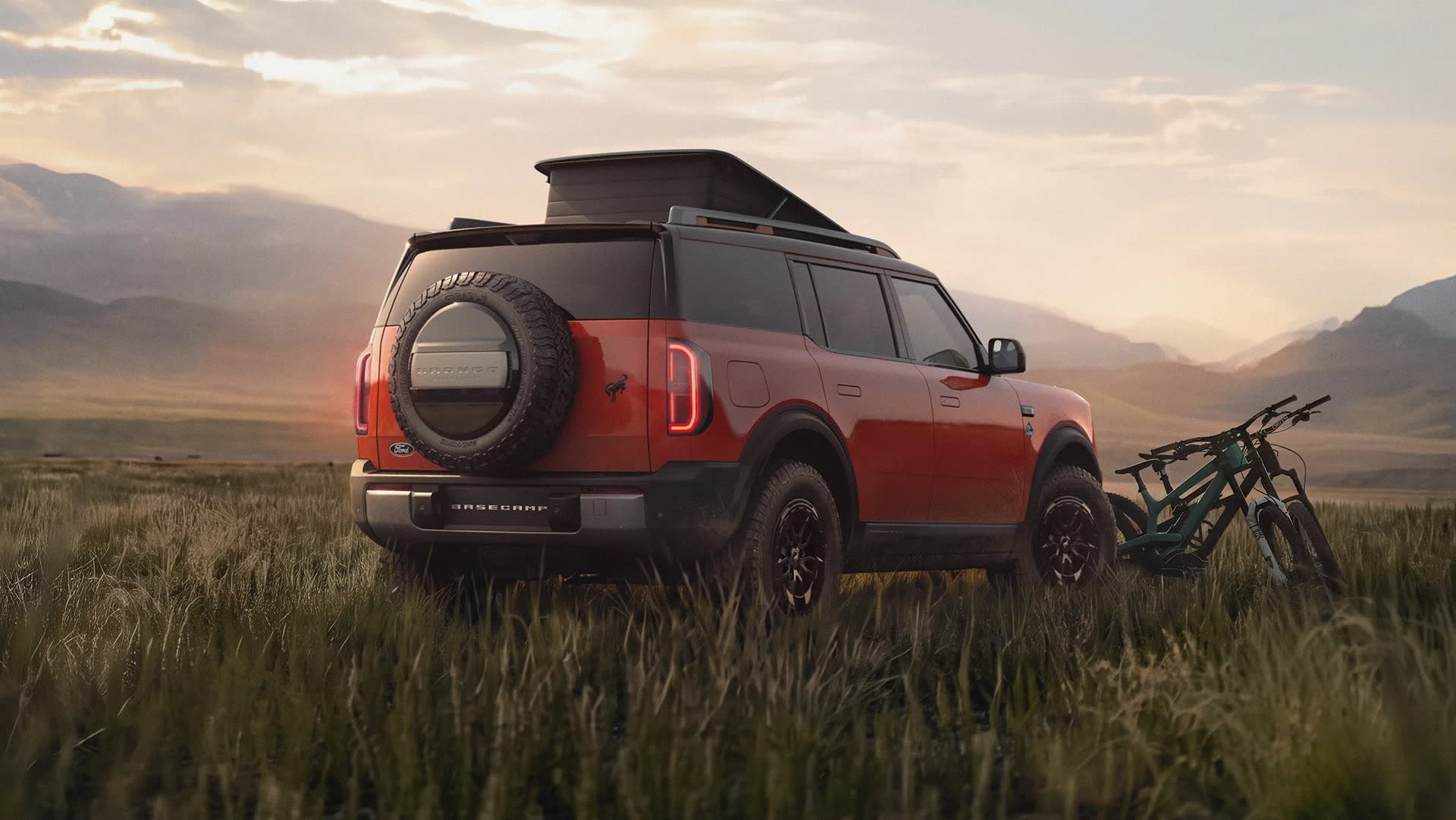
Ford Bronco Basecamp Australia: Everything We Know
Posted in Ford News
Ford Bronco Basecamp Australia: The Electrified Adventure SUV That Came Out of Nowhere
For years, Australians have watched the modern Ford Bronco from a distance. Then, seemingly out of nowhere, Ford confirmed that a Bronco was finally coming to Australia.
But it is not the North American Bronco many people expected.
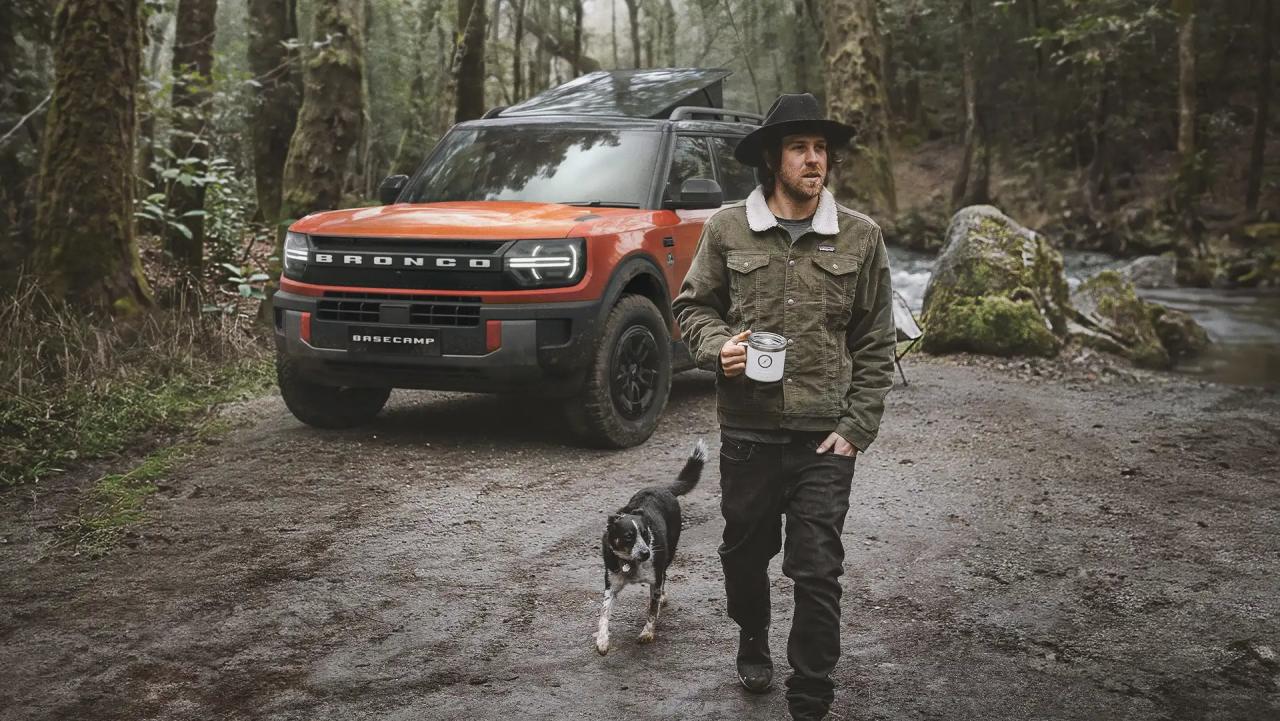
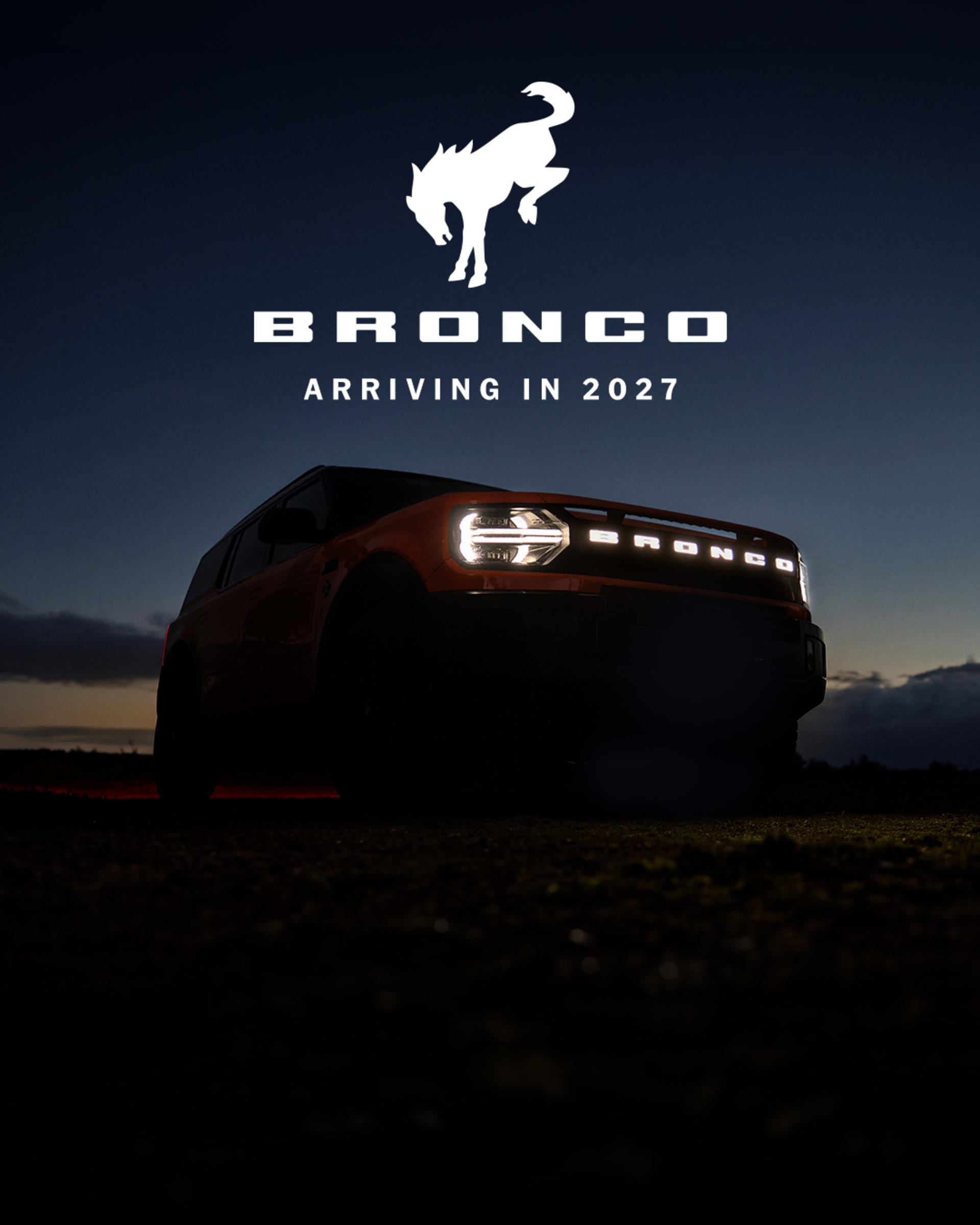
Arriving in the second half of 2027, the new Ford Bronco Basecamp is a fresh interpretation of the Bronco name. It combines electric-motor performance, petrol-backed touring range, standard all-wheel drive, five-seat SUV comfort and camping equipment integrated directly into the vehicle.
It is a Bronco built less around conquering the most extreme rock-crawling tracks and more around the way many Australians actually use their vehicles: driving to work during the week, carrying the family and heading beyond the city when the weekend arrives.
The Bronco name dates back to 1966, but Basecamp will become the first electrified member of the Bronco family.

Ford Bronco Basecamp Australia: what has been confirmed?
| Detail | Confirmed Australian Information |
|---|---|
| Australian Arrival | Second half of 2027 |
| Seating | Five seats |
| Powertrain | Extended-range electric vehicle, described by Ford as a super-hybrid |
| Battery | 49kWh usable battery |
| Petrol engine | 1.5-litre turbocharged engine used only as a generator |
| Drive system | Dual electric motors with all-wheel drive |
| Estimated combined range | 800–900km WLTP, subject to final testing |
| Onboard power | Up to 6.6kW through Pro Power Onboard |
| Camping features | Fold-flat sleeping space and rear swing-gate table |
| Outer Banks equipment | Pop-up roof and 7.5-litre warm/cool centre-console storage |
| Still to be announced | Price, complete model range, local outputs, electric-only range, towing capacity and final specifications |
Ford has stressed that its current range figure is preliminary, while final Australian specifications, equipment, appearance and accessories may differ from the overseas and digitally generated vehicles shown so far.
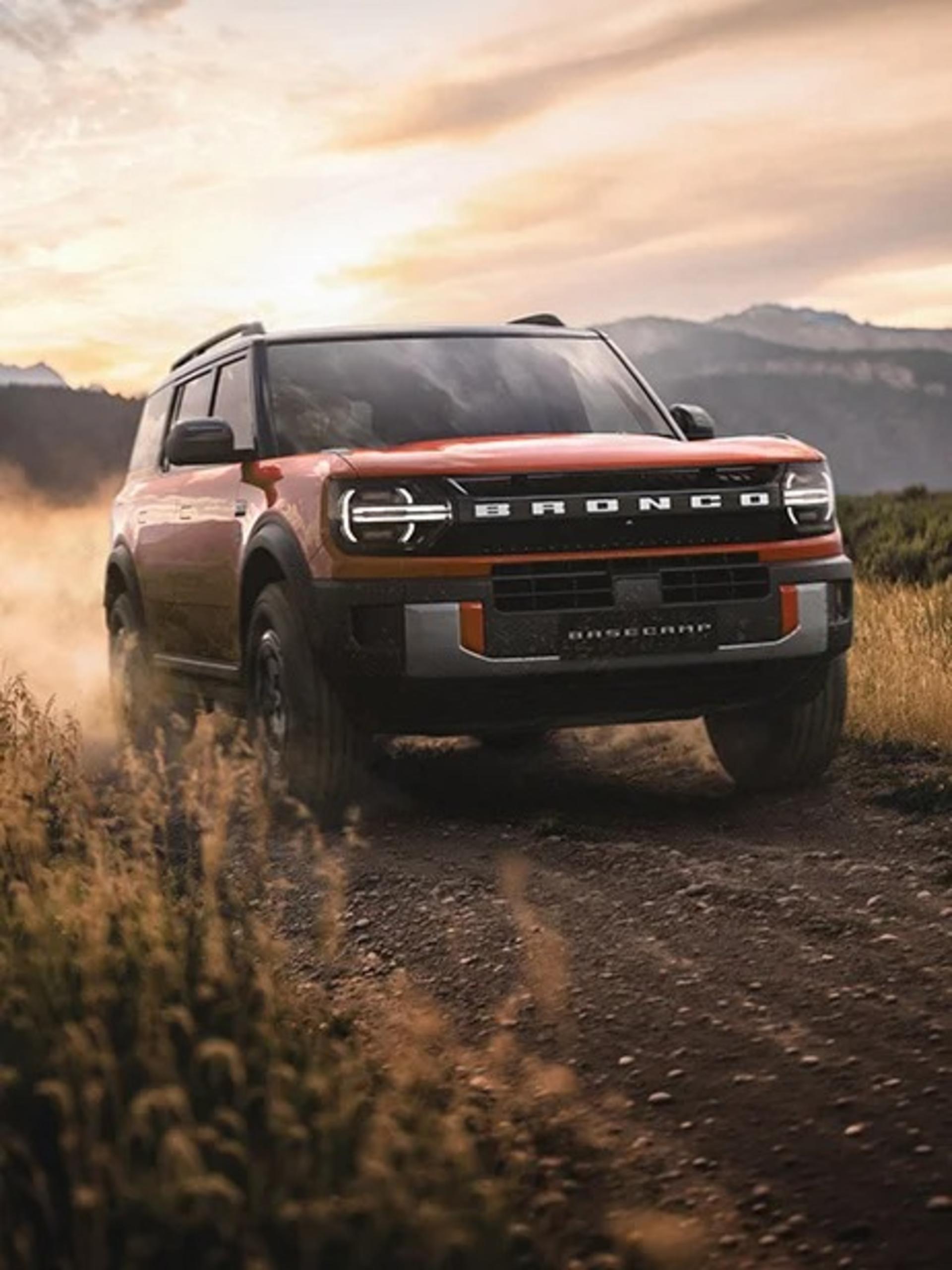
A Bronco, but not the one Australia expected
The Bronco Basecamp is not simply the American Bronco converted to right-hand drive nor is it the smaller Bronco Sport sold overseas.
Basecamp is a five-door, five-seat SUV using monocoque construction rather than the separate ladder-frame chassis found beneath the North American Bronco, Ford Ranger and Ford Everest. It was developed with Ford's Chinese joint-venture partner, Jiangling Motors Corporation, and will be built in China.
Australia is set to become the first market outside China to receive the new model with local development already taking place at Ford's You Yangs proving ground in Victoria.
That construction gives us an important clue about what Basecamp is intended to be. It should offer a more comfortable, car-like everyday driving experience than the Everest, while retaining the upright styling and adventurous character people associate with the Bronco name.
It is not designed to replace the Everest - instead, Basecamp opens a new space between a conventional family SUV and a traditional touring 4WD.
How does the Bronco Basecamp super-hybrid work?
Ford calls the Bronco Basecamp's powertrain a super-hybrid, although the more technical name is an extended-range electric vehicle, or EREV.
The wheels are driven by two electric motors-one at each axle-providing all-wheel drive. Energy is supplied by a usable 49kWh battery, which can be charged by plugging the vehicle in.
When more range is required, a 1.5-litre turbocharged petrol engine operates as an onboard generator. Unlike the engine in many conventional plug-in hybrids, it does not directly drive the wheels. Its job is to generate electricity and help maintain the battery's charge while the electric motors continue powering the vehicle.
That means the Basecamp should retain much of the immediate, smooth response associated with an electric vehicle while offering the reassurance of petrol when travelling beyond dependable charging infrastructure.
Ford currently estimates a combined driving range of 800 to 900 kilometres under the WLTP test cycle with a charged battery and fuel in the tank. The final figure, along with the Australian electric-only driving range and charging specifications, will be confirmed closer to launch.
A fully electric version is sold overseas, but Ford Australia has selected the range-extender powertrain for the local launch. Ford says it believes the petrol-backed system better suits Australians travelling long distances and visiting areas where public charging can become less readily available.
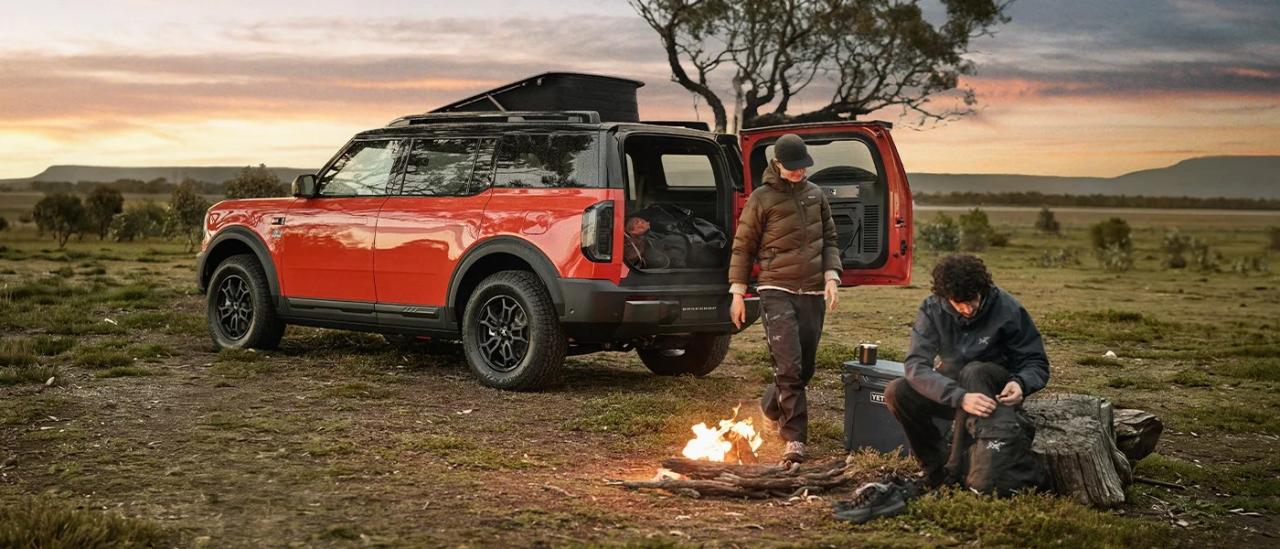
Why this powertrain could make sense in Australia
Australia presents a difficult challenge for electrified adventure vehicles.
An SUV may spend most weekdays making relatively short suburban journeys, where electric driving can be particularly useful. The same vehicle might then be expected to travel hundreds of kilometres to a national park, beach, campsite or regional destination on the weekend.
The Bronco Basecamp attempts to accommodate both situations.
Owners should be able to plug it in and use electric power for regular driving, while the petrol generator provides additional range when a trip stretches beyond the battery's capacity. It is an approach that reduces reliance on regional charging stops without abandoning the quieter and more responsive driving characteristics of electric motors.
Rather than asking owners to choose between an electrified city SUV and a petrol or diesel touring vehicle, Ford is attempting to combine elements of both.
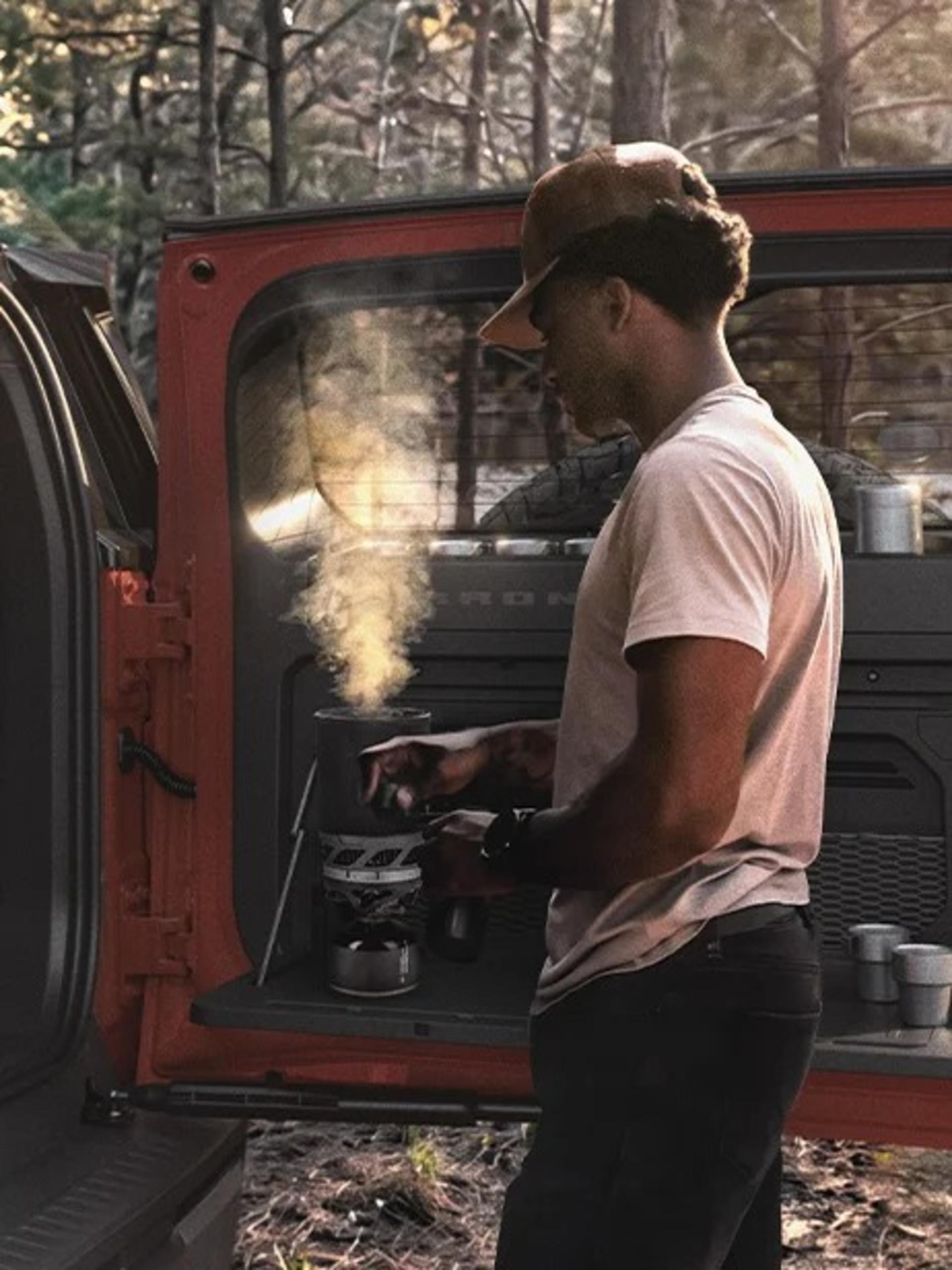
An SUV designed around the campsite
The most distinctive aspect of the Bronco Basecamp may not be its powertrain. It is the way Ford has incorporated camping features into the vehicle itself.
Both seating rows can fold down to create an internal sleeping area. Ford will also offer a custom-shaped inflatable mattress as an additional accessory, turning the cabin into a sheltered place for two people to sleep.
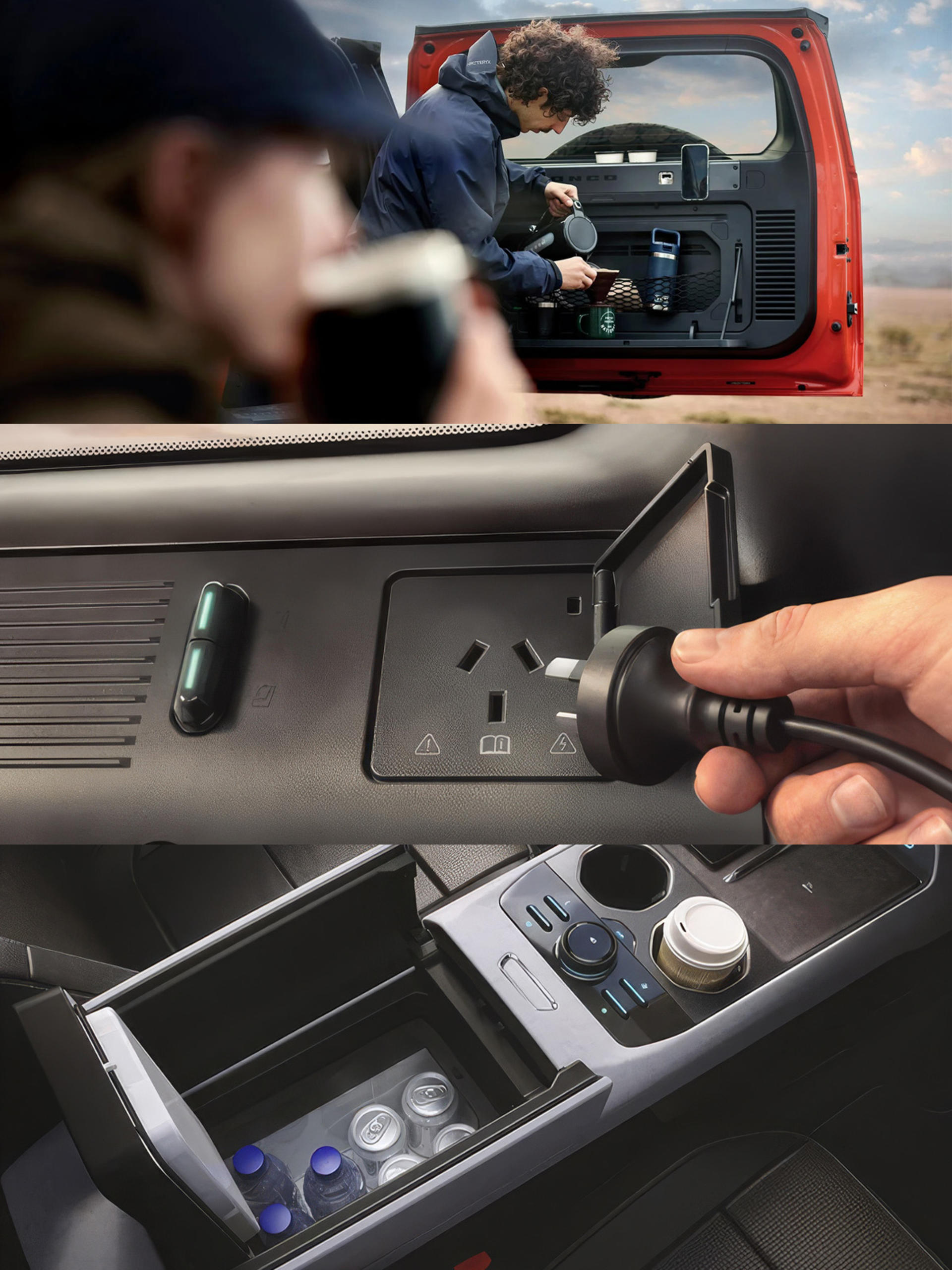
At the rear, a table folds down from the side-hinged swing gate, creating a convenient surface for preparing food or organising equipment. Ford refers to this camping-focused rear arrangement as its Wild Kitchen.
Pro Power Onboard
The Basecamp can also provide up to 6.6kW of Pro Power Onboard electricity. Depending on the outlet and adaptor being used, that could power equipment such as camp lights, laptops, a kettle, an espresso machine or an induction cooktop directly from the vehicle's drive battery.
Ford's Australian preview has focused heavily on the higher-specification Outer Banks model. Its additional camping features include:
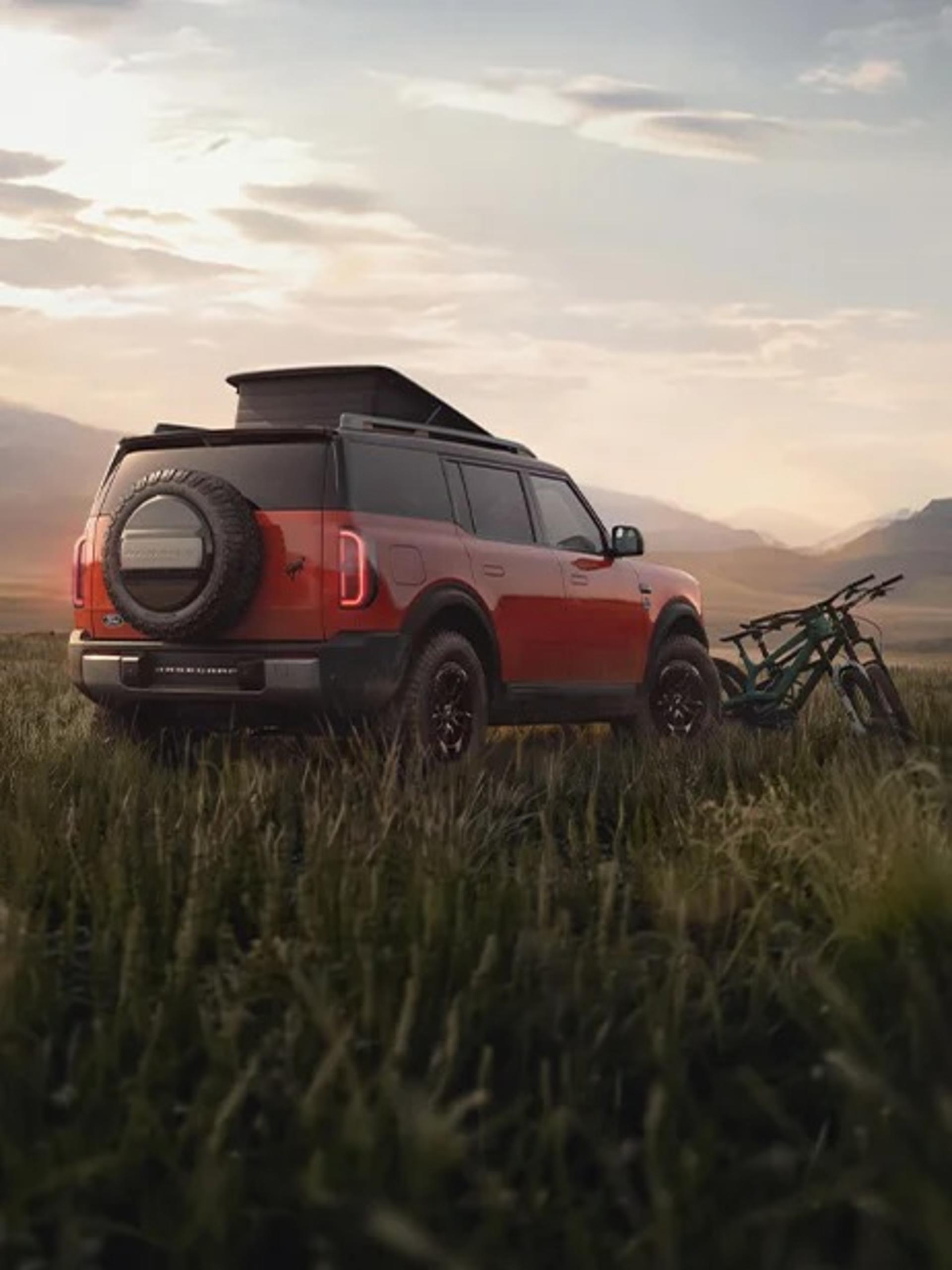
- An electrically operated pop-up roof that provides additional headroom and airflow while parked.
- A 7.5-litre warm/cool storage compartment integrated into the centre console.
- A cabin designed to work with the fold-flat sleeping area and accessory mattress.
Together, these features make Basecamp more than an SUV that can carry camping equipment. The vehicle itself becomes part of the campsite.
Comfortable enough for the rest of the week
For all its camping equipment, the Bronco Basecamp is still intended to function as an everyday family SUV.
There is seating for five, with Ford promising generous headroom, reclining seats in both rows, premium-feeling interior materials and modern cabin technology. It is important to note that Basecamp is not a seven-seater, which distinguishes it from family SUVs such as the Everest.
The large battery is positioned beneath a modern SUV body rather than a traditional 4WD wagon, while its dual-motor drivetrain removes the need for a conventional engine and transmission to power the wheels directly.
That combination could give the Basecamp a noticeably different character from Ford's current Australian SUVs: quiet and responsive around town, spacious enough for longer journeys, and ready to support an overnight stop once the road ends.
How capable will the Bronco Basecamp be off-road?
This remains one of the biggest unanswered questions.
Standard dual-motor all-wheel drive has been confirmed, and Australian engineering work includes local chassis development. Ford has also confirmed that the Australian model will be capable of towing, although its maximum braked towing capacity has not yet been announced. It is not expected to target the 3,500kg capability offered by the Ranger and Everest.
Overseas specifications provide some clues. The Chinese-market extended-range model has been reported with outputs of approximately 310kW and 600Nm, while available equipment includes locking differentials on selected versions. Overseas figures also point to approximately 220mm of ground clearance, a 30-degree approach angle and a 32-degree departure angle.
None of those performance or off-road figures has been confirmed for Australia, however. Overseas versions also do not use a traditional low-range transfer case, reinforcing that Basecamp is likely to prioritise touring, beaches, gravel roads, campsites and moderate off-road travel rather than the most technical tracks.
The final Australian suspension tune, drive modes, tyre choices, towing rating and off-road equipment will therefore be especially important.
What will the Ford Bronco Basecamp cost in Australia?
Australian pricing has not been announced.
Ford has also not confirmed the full local variant line-up, standard equipment by grade, colour range, power and torque outputs, electric-only range or charging times.
While overseas prices and specifications can provide clues, currency conversions do not reliably predict Australian pricing. Local safety equipment, battery specifications, transport costs, taxes, warranty coverage and model positioning can all influence the final figure.
Ford is expected to release more detailed Australian information as the second half of 2027 launch approaches.
The most unexpected Bronco may also be the most relevant
The Bronco Basecamp is not a recreation of the American Bronco formula-and that may be exactly what makes it interesting.
It draws on the Bronco name and Ford's off-road experience, but combines them with a newer type of electrified powertrain, a comfortable five-seat SUV cabin and camping equipment developed as part of the vehicle rather than added as an afterthought.
For Australian drivers, the appeal is easy to understand: electric driving for everyday journeys, petrol-supported range for longer adventures and enough onboard power to make a night away more comfortable.
There is still plenty we do not know. Price, towing capacity, electric range and final off-road specifications could significantly influence where Basecamp ultimately fits into the Australian market.
But after appearing with little warning, the Ford Bronco Basecamp has already become one of Ford Australia's most intriguing future vehicles.
Stay in the loop
Register your interest with Motorama Ford to receive the latest Bronco Basecamp updates, including Australian pricing, specifications, order timing and availability as they are confirmed.